Why a DIY Website Can Undersell Your Business
A website builder can put your business online. A web designer helps make sure the site says the right things, shows the right work, and gives customers a clear reason to get in touch.
Building your own website can look like the cheaper choice. You pick a layout, add your photos, fill in the pages, and publish. The cost that is easy to miss is the work the platform leaves with you: deciding what each page needs to say, writing it, choosing the right evidence, checking how it works on a phone, and keeping the project moving when your business needs your attention elsewhere.
If your website is expected to help win enquiries, those decisions matter more than how quickly you can put a page online. A visitor needs to understand what you do, why they should trust you, and what to do next. A professional designer brings focus and experience to that whole job.
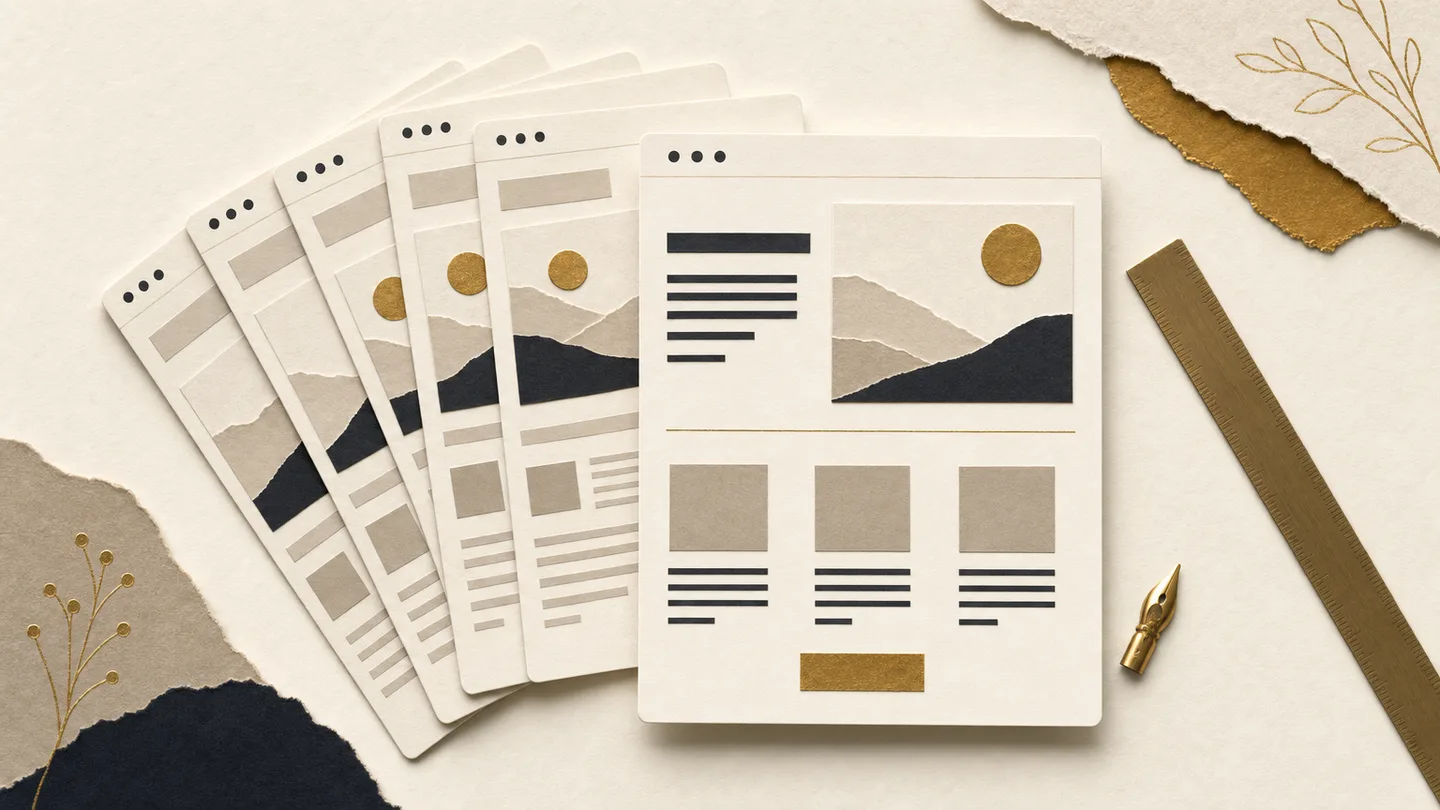
Illustration: A template gives you a layout. Your business still needs a message and a plan.
A template does not know your business priorities
The first problem with a DIY website is rarely the way the template looks. It is that the template cannot decide what your business most needs to communicate.
Imagine a landscaping company that wants more complete garden redesign projects. Its owner has plenty of photos and descriptions from maintenance work, so those are the easiest things to add to a new site. The result may look polished while quietly telling visitors that maintenance is the main service. The website is now promoting the work the owner wants less of.
A designer should spot that mismatch early. Which services are most valuable to the business? What questions will the right customers ask? What work can the company show to support its claims? Those answers should shape the pages before anyone worries about a color palette or animation.
Generic copy makes good businesses blend in
“Quality service tailored to your needs” sounds reassuring until you notice it could describe almost any company. A potential customer learns very little from it.
Useful website copy is specific. It explains the projects you take on, who you serve, what happens when someone contacts you, and what makes your approach worth considering. Real photographs, examples, and accurate details give the words substance. The goal is to help a visitor picture what working with your business would actually be like.
That writing takes time and judgment. Filling a page with the first description that comes to mind may get the site published, but it can leave your best reasons to be hired buried or missing altogether. The same is true of copy an AI tool drafts for you; why AI can’t replace a good website designer covers that side. A professional project should give the message as much attention as the visual design. Check whether writing and content planning are included in your designer’s proposal.
Visitors need a clear path to contact you
A website has to do more than list services. Someone may arrive unsure which service fits, whether you work in their area, or what will happen after they send an enquiry. If the answers are scattered across the site, the visitor has to do the work of piecing them together. That gap is why most small business websites never generate leads.
A designer can organize each page around the questions people are likely to have. A service page might lead to a relevant project example, answer a practical concern, then offer a clear next step. The navigation, headings, links, and contact form all help that path feel natural.
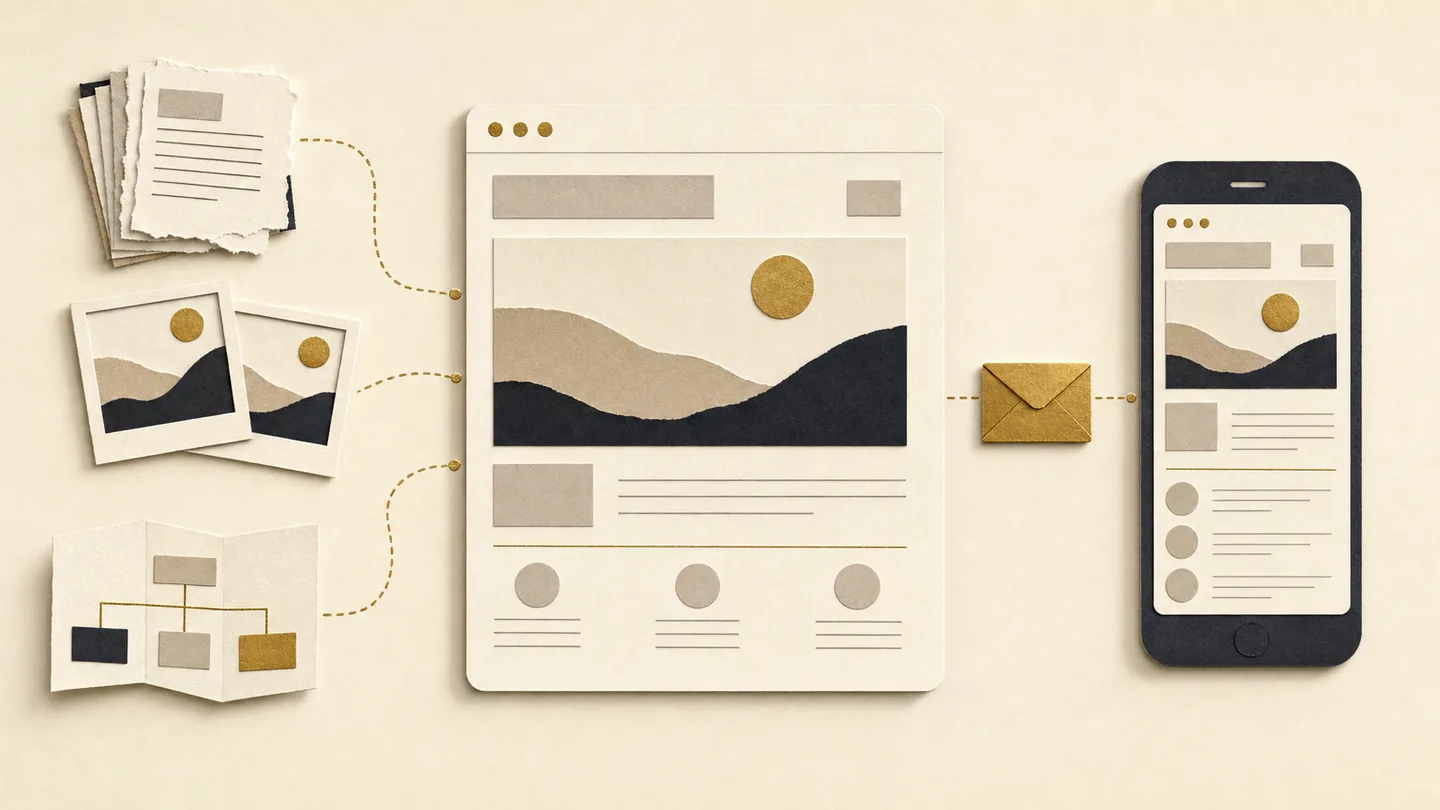
Illustration: A professionally planned site brings the message, examples, and next step together.
These choices are especially important on a phone. A visitor should be able to read the page, understand the offer, and contact you without fighting the layout. A good-looking desktop preview is only one part of the finished experience.
Your time is part of the price
A DIY tool may reduce the initial design fee, but it assigns the project to you. You become the person writing pages, gathering images, comparing layouts, solving small problems, and deciding when the site is ready. That work tends to compete with customers, appointments, and the everyday demands of running the business.
Hiring a designer does not remove you from the process. You still bring the knowledge only you have and approve the important decisions. The difference is that someone else can structure the work, identify what is missing, and carry the agreed tasks through to launch. Your time goes toward informed decisions rather than managing every detail yourself.
The job is not finished at “publish”
Before launch, someone needs to read the real pages, test the links and forms, check the mobile layout, and confirm where enquiries will arrive. You also need to know who owns the website accounts, how updates will be made, and what happens if a problem appears after launch. The same checks apply to a site that is already live; the free website audit runs them for you.
These details deserve a place in the project scope. Ask a prospective designer what they will handle, what you will provide, and what support follows the handover. A clear answer tells you what you are buying and who is responsible for each part of the finished site.
Invest in a website that represents your business
The strongest reason to hire a web designer is the combination of judgment and execution. You need someone who can ask better questions, turn the answers into a coherent site, and check that the result works for the people you want to reach. No website can promise enquiries on its own, but your customers should be able to understand your business and take the next step without guessing.
If your current website no longer reflects the quality of your work, or you are ready to build a new one, talk with Utu Nanna Studio about your website project. We can discuss what the site needs to do and whether working together is the right fit.
5 minutes · Written by Leah Norridge · Published
Want this looked at on your own site?
I score any site against the same 100 points and send you the findings, whether or not you ever hire me.
Tell me what you’re working on.
A few lines about your business are enough to start. We’ll talk through what you need, and I’ll put the scope and price in writing before any work begins.