
The Complete Small Business Website Planning Guide
Work through your pages, content, budget and timings before you start talking about design.
Read the guide → 22 minutesPDF ↓
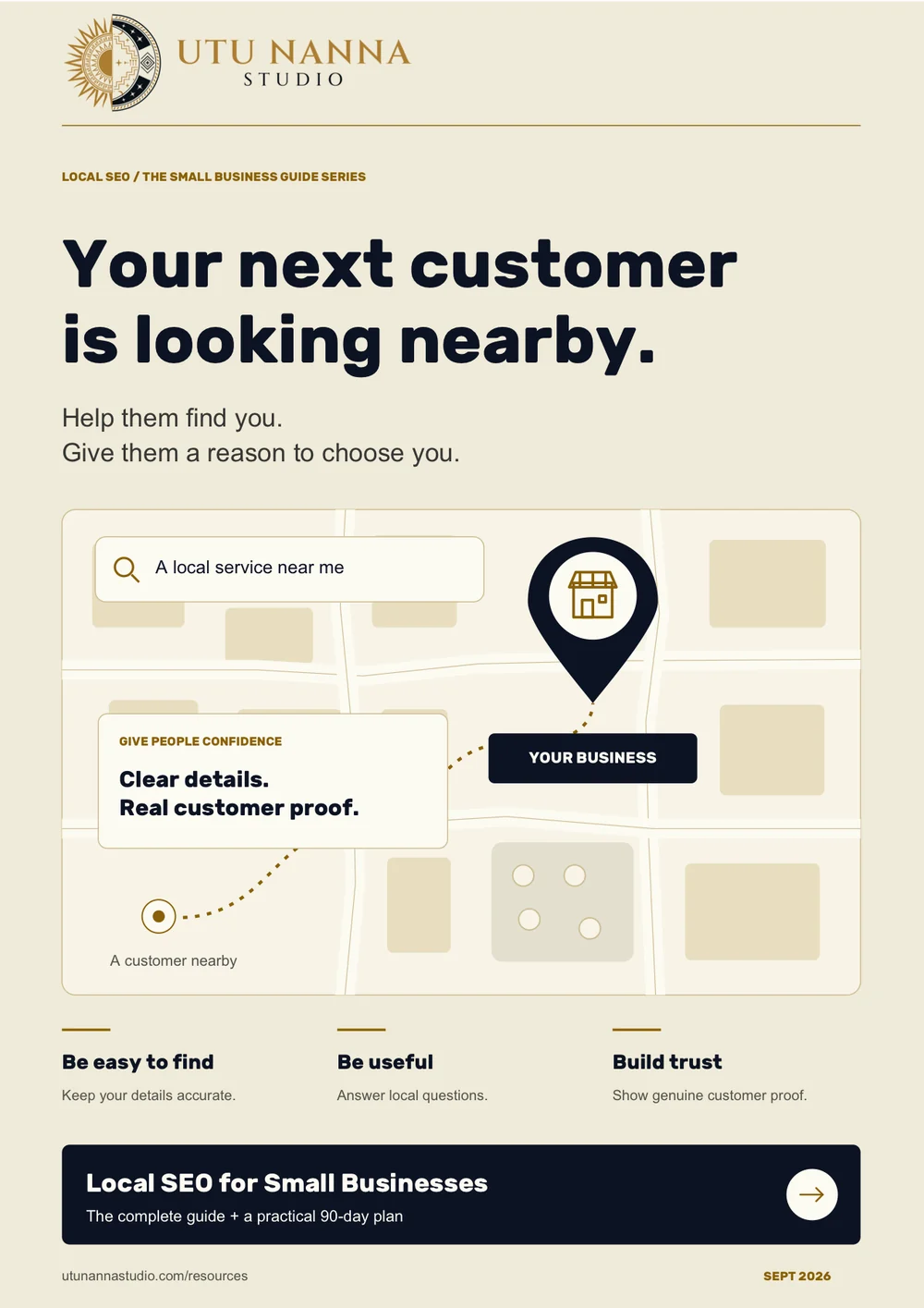
Help people in your area find your business and understand what you offer. This guide walks through the pages, listings and website setup worth paying attention to.
28 pagesSeptember 2026 edition24 minutes to read
Free · PDF · 28 pages · 271 KB
When someone searches “roof repair near me,” “family attorney in Fort Myers,” or “best coffee Babcock Ranch,” Google has to decide which businesses are relevant, nearby, and credible enough to show.
Local SEO is the work of making those signals accurate and useful across your website, Google Business Profile, and the broader web.
It is not a trick for inserting a city name into every paragraph. It is not a one-time directory submission. And nobody can pay Google for a better organic local ranking.
Google says local results are mainly based on relevance, distance, and prominence. You can influence relevance and prominence by presenting complete information, building a strong local reputation, publishing useful content, earning mentions and links, and maintaining a technically sound website. Distance is largely determined by where the searcher and business are located.
This guide explains how the pieces work together and gives small businesses a practical order for improving them.

Local visibility can include several surfaces:
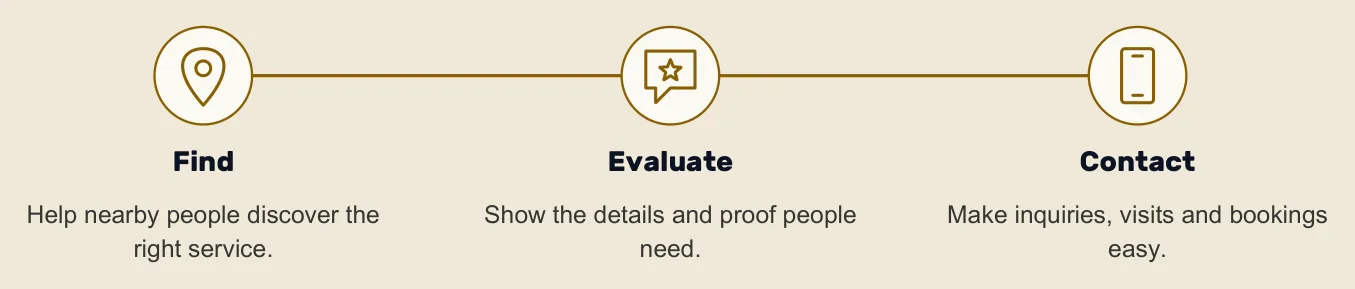
Your Google Business Profile and website support each other, but they are not interchangeable. The profile helps people discover, compare, call, navigate, and review. The website provides depth: detailed services, proof, process, accessibility, content, and conversion paths the profile cannot hold. When those paths are missing, visibility does not turn into enquiries; why most small business websites never generate leads explains why.
Before changing anything, record the current state. The free website audit covers the website half of this baseline, if you would rather have it done for you.
Create a single source of truth for:
Use the business name customers see in the real world. Do not add keywords or locations to the profile name unless they are genuinely part of the name.
Record:
Local rankings vary by exact location, device, and context. A single manual search from your office is not a reliable measurement system.
For many local searches, the profile is the first substantial interaction a customer has with the business.
Complete Google's required verification process and keep ownership in a business-controlled account. Add trusted managers with appropriate access rather than sharing one password.
The primary category should represent the main business, not every service it might provide. Add accurate secondary categories where appropriate. Do not select unrelated categories to appear for more searches.
Categories influence relevance and available profile features, so review them when the business changes and when Google updates its category options.
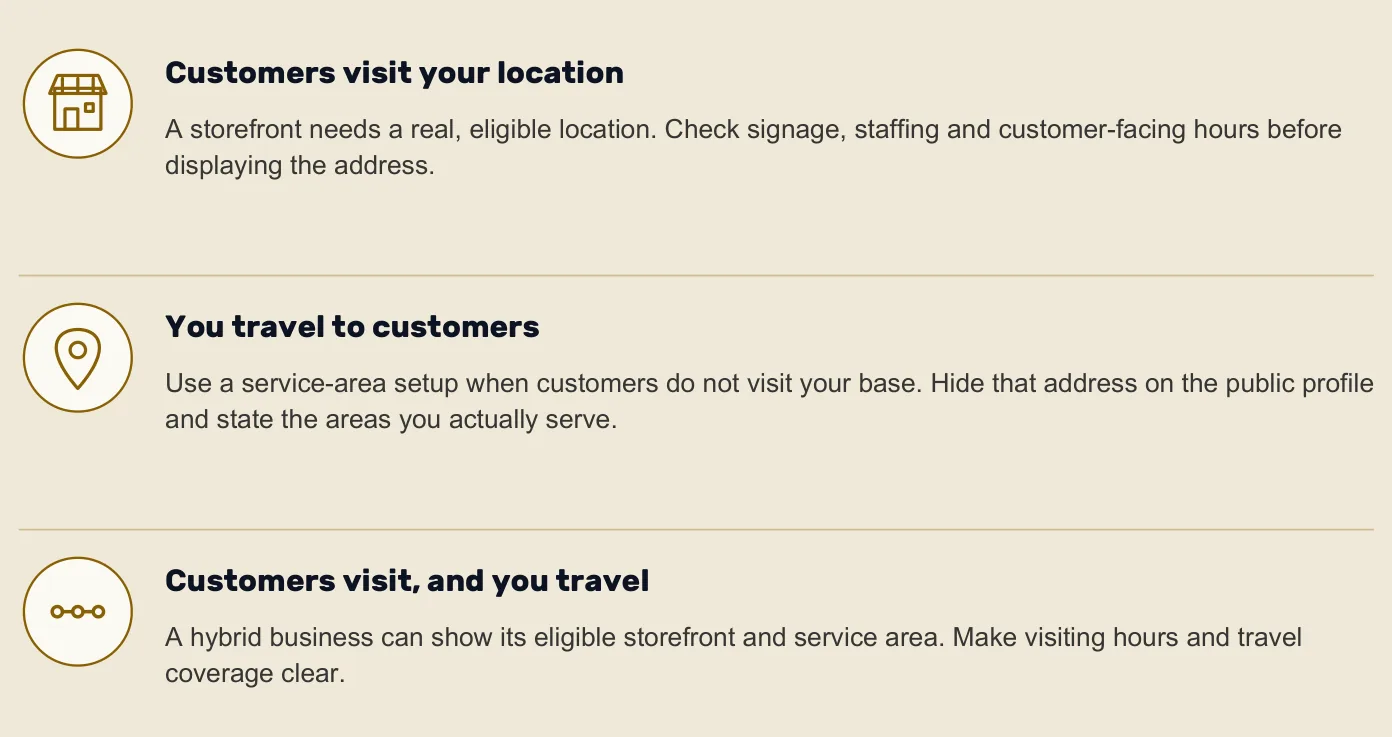
If customers can visit a staffed location during stated hours, the address may be eligible to display. A service-area business that travels to customers should configure its profile according to Google's current guidelines and hide an address that customers cannot visit.
Virtual offices, mailboxes, and unstaffed locations generally do not create legitimate local presence. A profile suspension costs far more than an artificial location is worth.
Add accurate hours, special hours, phone, website, services, attributes, and links. Use the profile description to explain what the business does, who it serves, and where it operates in natural language.
Completeness helps customers decide and gives Google better information. It does not justify filling fields with promotional claims or repeated keywords.
Use real, current visuals of:
Photography supports recognition and trust. It is especially important when the customer will visit a location or invite the provider into a home.
Google changes available features by category and region. Check the profile as a customer would. Make sure third-party links, suggested edits, service details, and contact actions remain correct.
Reviews influence customer decisions and contribute to local prominence. The goal is not a sudden pile of perfect ratings. It is a steady, representative record of genuine customer experiences.
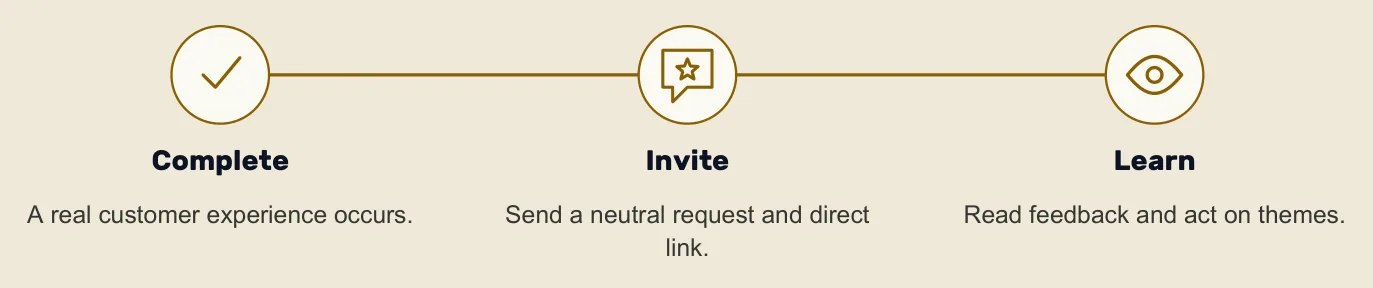
Build the request into the customer process:
Make the request simple and neutral. Provide the direct Google review link. Do not tell people what rating to leave or supply a script designed to manufacture identical praise.
Google prohibits incentives in exchange for reviews. Avoid “review gating,” where happy customers are directed to Google and unhappy customers are privately diverted. A review program should invite honest feedback consistently.
Reply to positive and negative reviews with professionalism. Thank the reviewer, refer to their experience without exposing private details, and address concerns constructively.
Do not turn every response into a keyword-filled advertisement. The primary audience is the reviewer and future customers reading the exchange.
Reviews reveal what customers value in their own language. Repeated praise about communication, cleanliness, patience, speed, or expertise can inform website copy—if the business can support the claim. Repeated complaints can reveal operational issues SEO cannot fix.

The website should clearly establish what the business does, where it operates, and why customers should trust it.

Each priority service deserves enough detail to answer real questions:
Do not create a separate page for every minor keyword variation. Build the best page for the underlying customer need. The website planning guide covers how to give every page one clear job.
Include the business's accurate contact and location information in a consistent sitewide location, such as the footer and Contact page. Describe the service area naturally on relevant pages.
For a physical location, provide practical details: address, hours, parking, accessibility, landmarks, and directions. For a service-area business, explain where the team travels and whether availability or fees vary.
A business serving several meaningful markets may benefit from a page for each one. A useful location page can include:
Copying one page and swapping “Naples” for “Cape Coral” creates little customer value. Hundreds of thin location pages can look like doorway pages designed for search engines rather than people. The studio's own Babcock Ranch page is one worked example: a single location with real local work behind it.
The Contact page should remove uncertainty. Include accurate name, address when appropriate, phone, hours, service area, expected response time, and alternative contact methods. Make the form accessible and test delivery regularly.
Embed a map when it genuinely helps visitors, while considering performance and privacy. The map is not a substitute for location details in text.
Local citations are mentions of a business's name, address, and phone number on directories, industry sites, chambers, associations, and other platforms.
Perfect character-for-character uniformity across the entire internet is unrealistic, but the core identity should be accurate and unambiguous.
Focus on:
Quality and relevance matter more than submitting to hundreds of unknown directories.
Look for old addresses, disconnected phone numbers, duplicate listings, incorrect hours, and closed locations. Keep a record of logins, claimed profiles, and update status. Follow Google's current guidelines for representing a business when correcting profile details or managing locations.
Do not obsess over harmless formatting differences such as “Street” versus “St.” while a major platform shows the wrong phone number.
Structured data gives search engines machine-readable information about a page. For a local business, LocalBusiness markup can describe details such as the name, address, phone number, URL, hours, and geographic information.
Use a supported subtype such as Restaurant, Dentist, or another specific business type when it accurately fits. Each genuine location should be represented correctly.
Structured data should describe what the page actually shows. Do not mark up hidden, misleading, or invented information. Review properties against Google's current documentation and validate the implementation with its Rich Results Test.
Structured data helps search engines understand information; it does not guarantee a rich result or higher ranking. Setting it up correctly is part of the SEO foundations work on any site the studio builds.
Internal links help people and search engines discover relationships between pages.
Useful examples include:
Use descriptive anchor text. “See our commercial landscaping services” is more informative than “click here.”
Do not turn every mention of a city or service into a link. Internal linking should support navigation and understanding.
Local content does not have to be a stream of “Top 10” posts. It should combine the business's expertise with conditions that matter in the market.
Ideas include:
For Southwest Florida, genuinely useful content might address heat, humidity, storm preparation, seasonal residents, rapid development, or the differences between coastal and inland needs—depending on the business.
A resource library should become more useful over time. Update important guides when the facts change, consolidate overlapping articles, and remove content that is no longer accurate or relevant.
Links from reputable websites can contribute to prominence and organic visibility. The most sustainable links come from real relationships, useful assets, and noteworthy work.
Potential opportunities include:
Do not buy large batches of low-quality links or create fake local sites that exist only to point back to the business. Short-term tactics can create long-term cleanup.
Local customers are often searching on phones, sometimes with limited time and poor connectivity. Technical quality directly affects whether they can act.
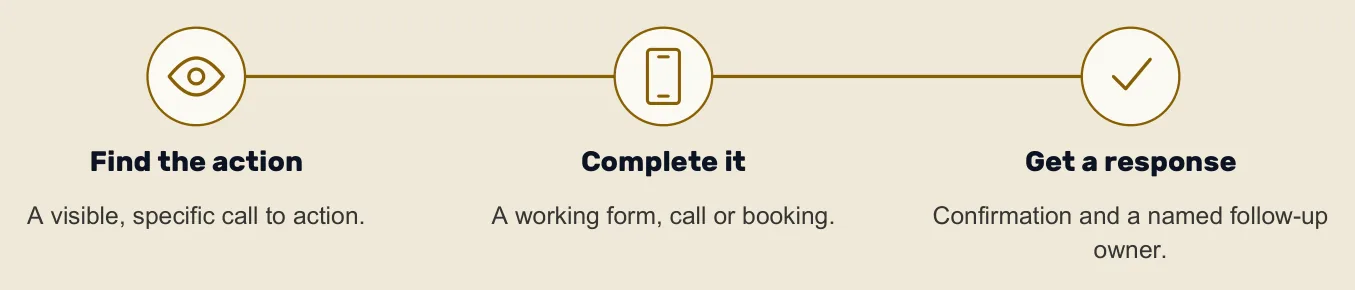
Review:
Google's Core Web Vitals focus on loading, responsiveness, and visual stability. Good thresholds are useful targets, but the larger goal is a site that feels dependable to real customers. If the current site cannot be fixed in place, How to Choose the Right Website Designer covers what to ask about performance and SEO before commissioning a redesign.
Service-area businesses often want to rank in every city they can reach. Search results, however, are influenced by the searcher's distance and the business's established relevance and prominence in each area.
To build legitimate market presence:
There is no ethical setting that makes one location equally “near” to an entire region.

Rankings are diagnostic, not the final objective.
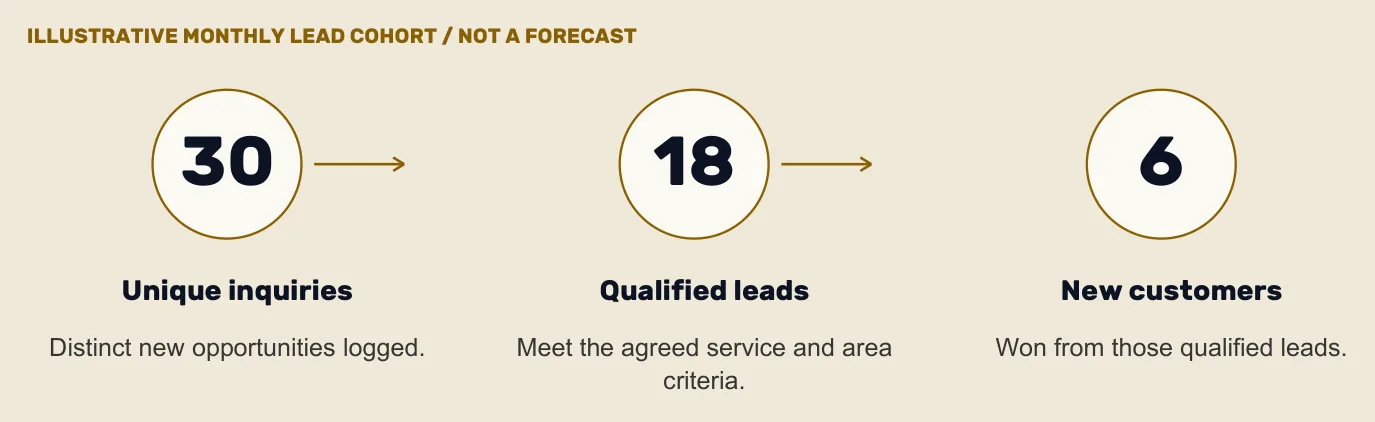
Track a balanced set of signals:
Add consistent source questions to the sales process. Analytics attribution is imperfect, especially when someone discovers a business on Maps and calls later from another device.
Local results fluctuate by location, competition, season, and updates. Review monthly and quarterly trends. Tie recommendations to observed customer behavior and business priorities. What happens after your website goes live sets out a review rhythm for the first months.
Most of these overlap with the biggest website mistakes seen on small business sites generally; the local versions are below.
Adding services and cities to the Google Business Profile name when they are not part of the real name violates guidelines and creates brand inconsistency.
Virtual offices and unstaffed addresses can create suspension risk and mislead customers.
Fake and rewarded reviews violate platform policies and damage trust.
Thin pages that only change the place name do not provide a useful local experience.
A defensive or absent response can reinforce the concern. Respond calmly, protect privacy, and move detailed resolution to an appropriate channel.
A number-one position for an irrelevant phrase can be worthless. Connect visibility to qualified demand.
Wrong hours, old phone numbers, and conflicting service areas frustrate customers and weaken confidence.
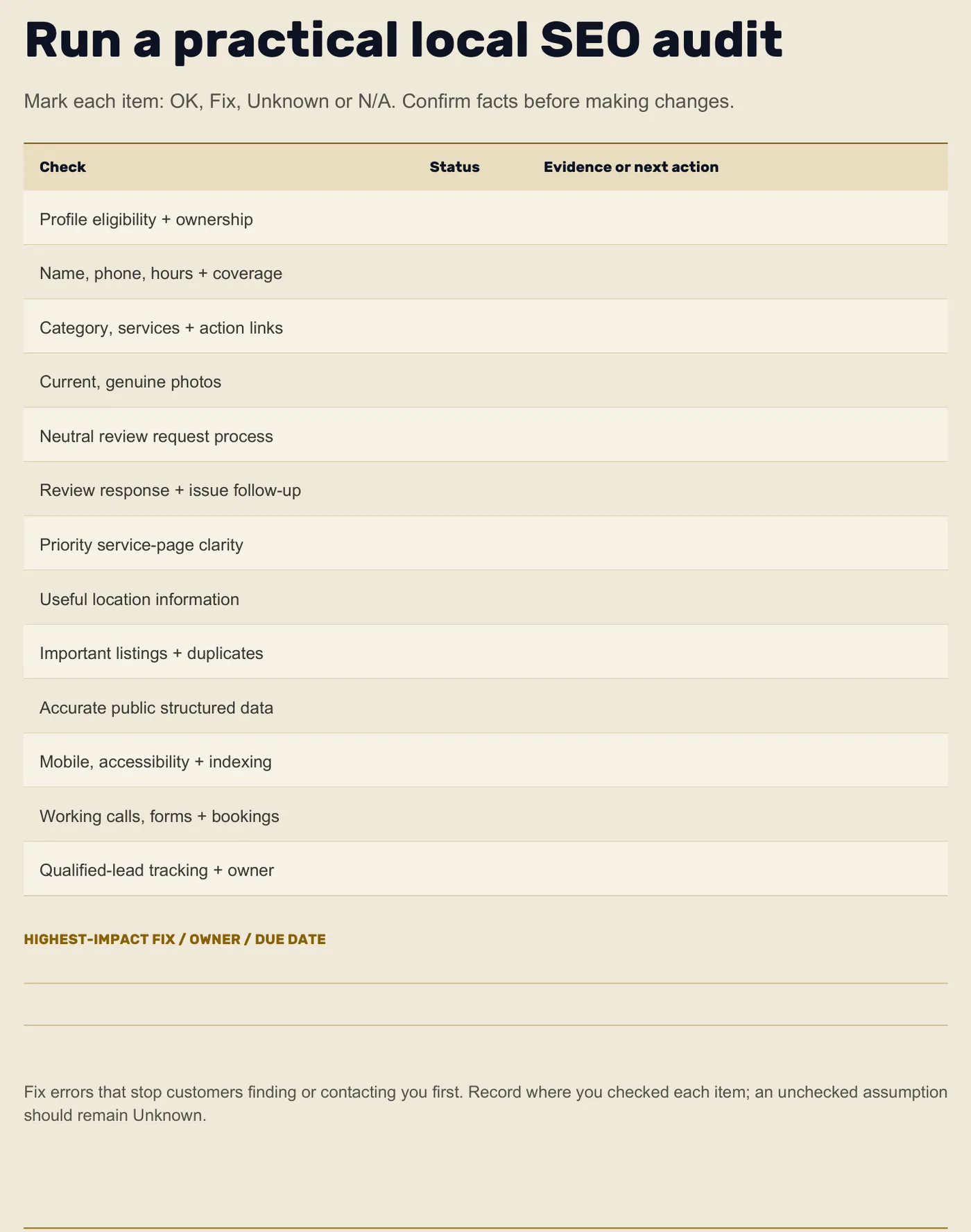
Critical corrections can improve customer experience immediately. Search visibility usually develops over months and depends on competition, current authority, proximity, review profile, website quality, and consistency of effort. Be cautious with guaranteed timelines or positions.
Most eligible local businesses benefit from both. The profile supports discovery and quick actions in Search and Maps; the website provides deeper information, differentiation, proof, and conversion paths.
Accurate name, address, and phone information matters because customers and platforms need to identify the business correctly. Focus on correcting meaningful conflicts and duplicates across important sources, not harmless punctuation differences everywhere online.
There is no universal target. Review expectations vary by category and market. Build a steady process that invites genuine feedback from eligible customers, and focus on recency, relevance, and what the reviews reveal—not only the total count.
A concise, readable service-area statement can help customers. A long block of repeated city keywords is not useful. Explain priority areas on relevant pages and create dedicated location content only where you can add substance.
Yes, but distance remains a factor. Build genuine relevance and prominence through strong service pages, real local work, reviews, links, and substantial location content. Do not invent offices.
The foundation can be improved in a project, but profiles, reviews, listings, content, competitors, and the business itself keep changing. Ongoing maintenance and improvement are part of the work.
Local SEO is not about appearing everywhere for everyone. It is about becoming a strong, accurate, trusted answer when the right person nearby needs what the business does.
Complete the profile. Make the website genuinely helpful. Earn real reviews and local relationships. Measure qualified results. Keep the information accurate.
If your business serves Southwest Florida and local customers are struggling to find you, talk with Utu Nanna Studio or start with the SEO foundations service. We can help you build a local search foundation that connects visibility with real customer decisions.
The same guide, laid out for 28 pages of A4 with the worksheets you can print and write on. No email address, no sign-up.
Download the local seo PDF →PDF · 28 pages · 271 KB
The rest of the series
Work through your pages, content, budget and timings before you start talking about design.

What to ask, what to look for in a proposal and how to decide whether a designer is a good fit.
24 minutes · Written by Leah Norridge · Published
I score any site against the same 100 points and send you the findings, whether or not you ever hire me.
A few lines about your business are enough to start. We’ll talk through what you need, and I’ll put the scope and price in writing before any work begins.